The Art of Habit Stacking: Building Routines Effortlessly
Habit stacking is a technique derived from the principles of behavioral psychology, specifically the concept of "synaptic pruning" and "implementation intentions."
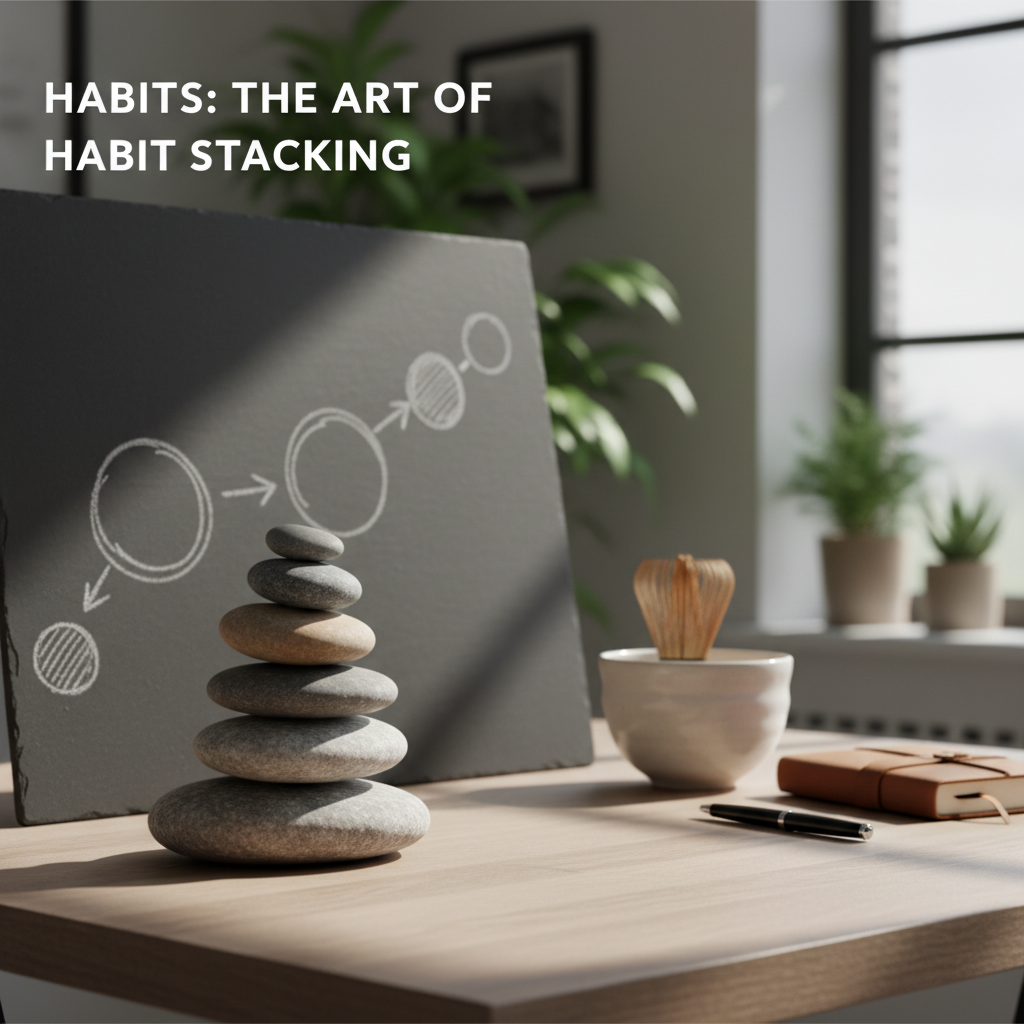
The core idea is simple: instead of trying to build a new habit from scratch in a vacuum, you "stack" it onto an existing, well-established habit. This utilizes the existing neural pathways in your brain to anchor the new behavior.
The Structural Flow of Habit Stacking
1. Identify the Anchor: Choose an existing habit you do every day without fail (e.g., brewing coffee, brushing teeth).
2. The Formula: "After [Current Habit], I will [New Habit]."
3. Specificity: The new habit must be small and clearly defined (e.g., "After I pour my morning coffee, I will sit for one minute of silence").
This technique is effective because it removes the "decision fatigue" associated with starting a new behavior. You don't have to decide when or where to perform the new habit; the existing habit acts as a natural trigger. This is based on the work of BJ Fogg and James Clear, who emphasize that small, consistent changes are more sustainable than large, radical shifts.
Neurologically, this process is known as "long-term potentiation." When neurons fire together in a specific sequence, the connection between them strengthens. By repeatedly following an old habit with a new one, you are essentially wiring them together in your brain's architecture.
Over time, these "stacks" can become quite complex, forming the backbone of a highly efficient daily routine. However, the key to success is to start small. A stack that is too ambitious will likely collapse under the weight of its own complexity. The goal is to make the new habit so easy that it is impossible to say no to.
Why it Works
- Reduces Cognitive Load
- Uses Existing Neural Triggers
- Increases Consistency
- Builds Momentum